 Business License

How to maintain surface finish of tension leveler rolls for metal strip?
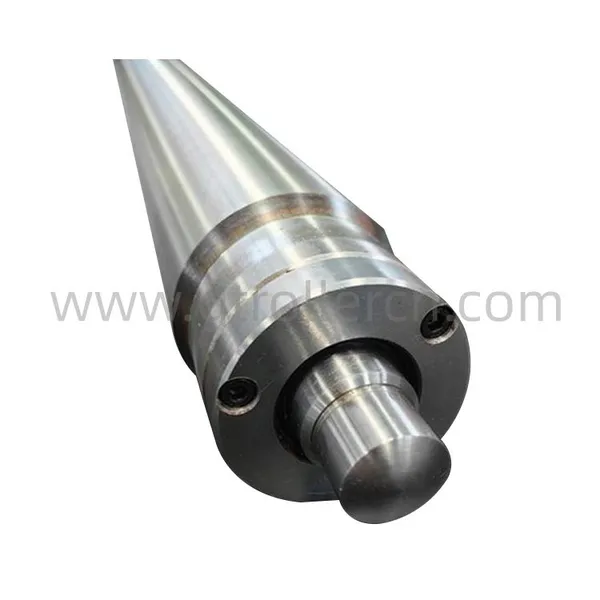
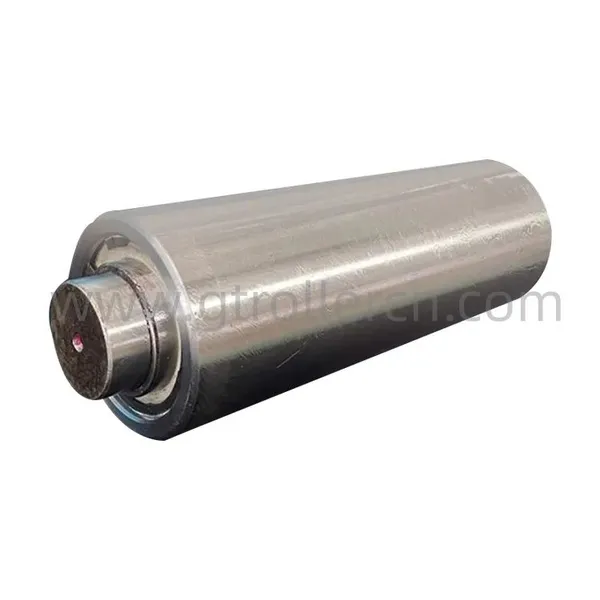
Tension leveling works by bending the strip over small-radius Rolls under tension. The problem is that the strip is not clean. Hot-rolled steel carries scale. Aluminum carries aluminum oxide particles that are extremely hard and abrasive. Those particles do not just pass through. They collect on the work rolls and the Backup Rolls .
Once they collect, two things happen. The particles brinell the backup roll surface, creating small depressions. Those depressions then transfer through to the work roll, and from the work roll to the strip. The result is a surface that looks like it has been peened rather than leveled. Vibration also climbs because the roll surface is no longer uniform.
The older solution was to wipe the rolls with felt pads or fabric. One patent describes a system where a fabric media strip is pressed against the backup rolls at a speed different from the roll surface speed, so the relative motion wipes contaminants away . The key insight is that cleaning the backup rolls indirectly cleans the work rolls, because the backup rolls are in constant contact with the work rolls. If you are fighting surface finish problems, check whether your roll cleaning method is actually removing particles or just moving them around.
Surface Roughness Is a Specification, Not a Guess
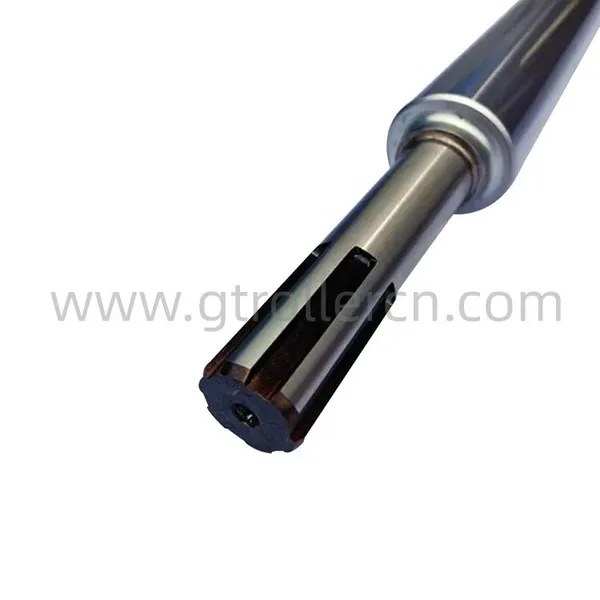
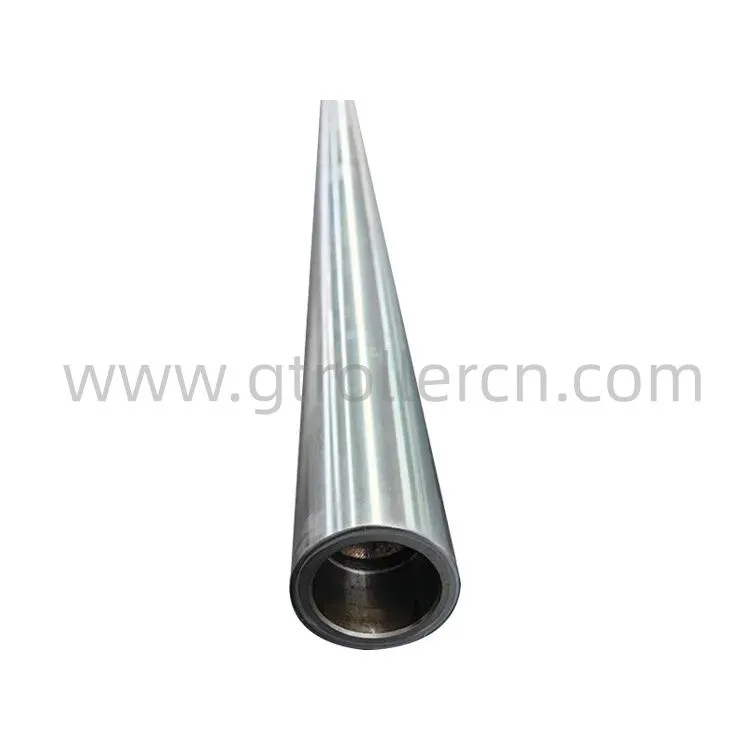
Tension Leveler Rolls are not supposed to be mirror-smooth. The work roll needs some roughness to maintain grip on the strip. But that roughness has a window.
One production specification for a tension leveler work roll lists a surface roughness of Ra2.5/Rz14.0 with a high-hardness chrome plating of 65±5 μm . Another application describes a work roll with roughness below Ra0.05 for a different strip requirement. The point is not that one number is correct. The point is that the roughness is tied to the application.
For skin pass and tension leveling operations, a roughness gauge is a more useful maintenance tool than a visual inspection. The Oxmaint maintenance framework for skin pass mills lists Ra measurement every 80 to 120 km of strip as a standard PM task, with a warning band starting at 1.6 μm and a change threshold above 2.0 μm . If you are not measuring roughness on a tonnage or kilometer basis, you are guessing. And guessing on roll finish means you find out about the problem when the coil is already downgraded.
Alignment and Vibration: The Hidden Finish Killers
A roll that is perfectly finished but misaligned will still produce bad strip. Uneven roll gap or axial misalignment creates uneven contact pressure. The side of the strip that sees higher pressure gets a different surface texture than the other side.
Research on tension leveler work roll wear found that axial forces from misalignment can damage the roll-end support bearings, and when those bearings fail, the roll can drop or shift . Even before catastrophic failure, the vibration from a misaligned roll train creates a periodic imprint on the strip surface. You will see it as a pattern of marks spaced at the roll circumference.
The practical check is straightforward. Measure vibration at the roll chocks and compare the trend to the baseline. If the vibration at the roll rotational frequency climbs, alignment or bearing clearance is changing. Fix that before you blame the roll surface.
What to Actually Do on the Floor
Start with the cleaning system. If you are running aluminum or heavily scaled steel, confirm that the backup rolls are being wiped effectively. Fabric media systems work, but only if the fabric is advancing and the contact pressure is maintained. A stalled fabric roll does nothing.
Then track roughness by tonnage, not by calendar. Pull a roll for inspection when the Ra trend approaches the upper limit, not when the strip already fails. Check backup roll hardness at every roll change. A portable Shore hardness tester takes less than a minute per roll, and it tells you whether the cushion is still there.
And when you regrind a work roll, do not just grind to diameter. Grind to the surface roughness specification. A roll that is dimensionally correct but too smooth will slip. A roll that is too rough will mark the strip. The finish is part of the part.
FAQ
What causes scratches on leveled strip even when the work rolls look clean?
The backup rolls are the usual suspect. Particles caught between the work roll and backup roll brinell the backup roll surface, and those depressions transfer through to the strip. Check the backup roll surface condition and the cleaning system effectiveness before replacing the work roll .
Should the backup roll be harder or softer than the work roll?
Softer on the surface, and much softer inside. A backup roll surface in the HS70–HS75 range against a work roll in the HS83–HS92 range is a typical design . The soft core absorbs impact from scale and foreign matter. If the backup roll gets too hard, the work roll takes the damage instead.
How often should tension leveler roll roughness be measured?
Every 80 to 120 km of strip is a reasonable baseline for skin pass and leveling operations, with the interval tightened if the line runs abrasive material . The absolute number matters less than the trend. A roll that climbs from Ra1.2 to Ra1.9 over a campaign is telling you something.
Does chrome plating eliminate the need for roughness control?
No. Plating adds wear resistance and can extend roll life, but the underlying roughness profile still matters for strip grip and surface transfer. A plated roll with the wrong Ra will still produce the wrong strip finish .
Can vibration from a misaligned roll train damage the roll surface?
Yes. Misalignment creates uneven contact pressure and axial forces that load the roll bearings and support system . The resulting vibration creates periodic marks on the strip and accelerates local wear on the roll surface. Fix alignment before chasing finish problems.
Recently Posted
-
Can Straightening Roll Profiles And Sizes Be Made To Order?
November 18, 2026Off-the-shelf options work for common sizes, but they often leave marks, struggle with special profiles, or cannot hit your target Read More
-
How Many Operating Hours Pass Before A Leveler Roll Cassette Needs Servicing?
November 18, 2026Many plant operators wait until flatness errors or strange noises appear before touching their leveling equipment. This reactive a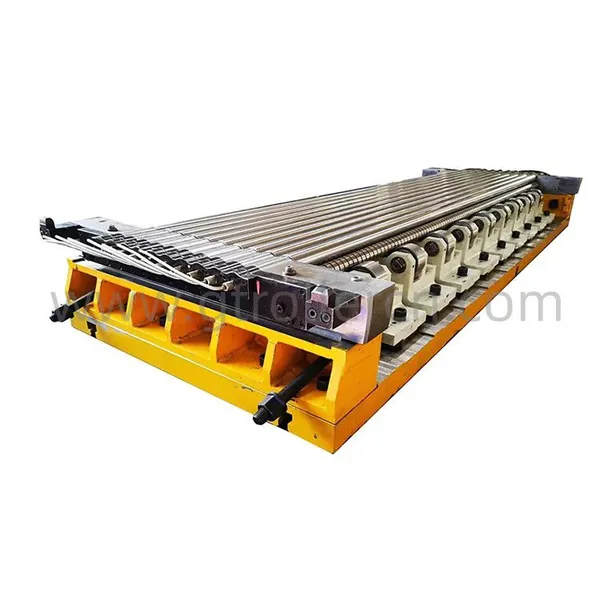 Read More
-
Steps for Adjusting and Aligning Straightening Rolls
November 12, 2026Many operators rush the setup, crank adjustment screws too far, or skip alignment checks, then wonder why the material twists, mar
Read More -
The Functions of Scale Breaking Work Roll
November 12, 2026If you work with steel pickling lines or tension leveling equipment, you have probably noticed how stubborn oxide scale can be. Th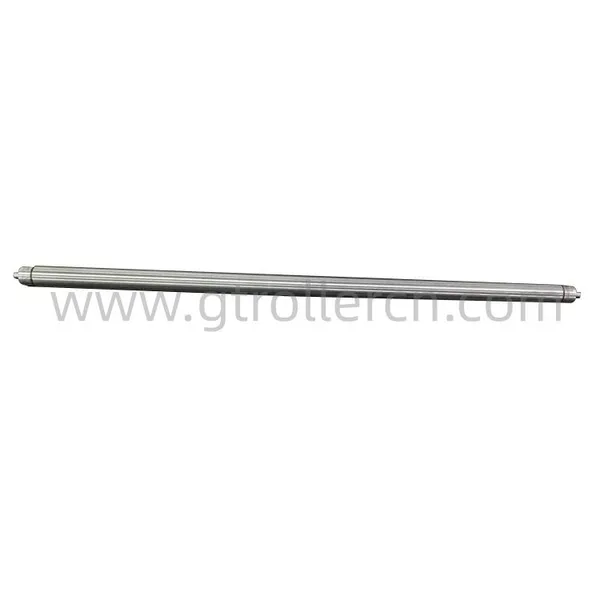 Read More