 Business License

How to Adjust Pressure Settings on a Working Straightening Roller?
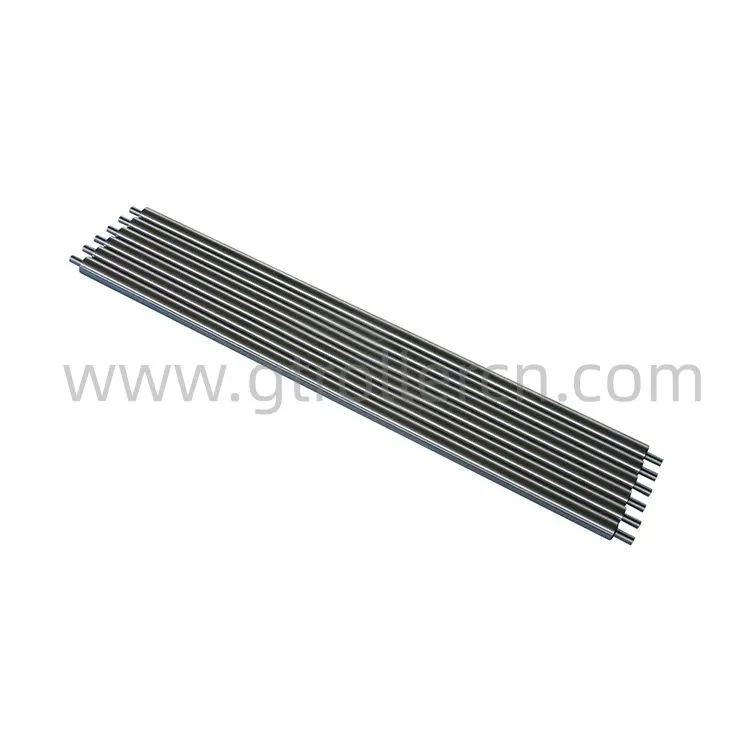
Material straightening is a core process in sheet metal manufacturing, strip processing and precision finishing industries. The overall flatness, surface quality and dimensional accuracy of finished products largely depend on precise pressure control during operation. A straightening roller relies on balanced pressing force to flatten bent, warped or uneven materials without causing secondary damage. Many production defects stem from uncalibrated pressure, making accurate adjustment essential for standardized processing.
Why Pressure Calibration Matters for Straightening Operations
In continuous industrial production, operators often stick to fixed pressure parameters for all material types. This one-size-fits-all approach creates hidden quality risks. Insufficient pressure cannot completely eliminate material warping, leaving residual bending and unqualified flatness. Excessive pressure, by contrast, causes surface indentation, material thinning, edge cracking and internal structural stress.
Over time, unstable pressure settings also accelerate mechanical fatigue. Uneven force distribution wears Roller surfaces unevenly, shortens equipment service life, and increases unplanned downtime. Regular pressure adjustment and calibration keep the entire leveling system balanced and productive.
Core Principles of Scientific Pressure Adjustment
1. Match Pressure to Material Thickness and Hardness
Different materials have unique yield strength and toughness. Thin and soft materials require low pressing force to avoid extrusion deformation, while thick, high-hardness plates need increased pressure to eliminate rigid warping. Blindly raising pressure for faster production always leads to defective products and material waste.
2. Maintain Symmetric Force Distribution
Straightening quality depends on uniform force across the entire material surface. Asymmetric pressure adjustment causes unilateral stress concentration, resulting in diagonal warping and irregular curvature. Symmetric parameter tuning ensures each contact point delivers consistent flattening force for balanced straightening results.
3. Gradual Fine-Tuning Instead of Drastic Changes
Sudden large pressure changes impact both the material and mechanical structure. Gradual incremental adjustment allows operators to observe real-time flatness changes, avoid over-correction, and lock in the most stable parameter range for long-term operation.
Step-by-Step Pressure Adjustment Workflow
1. Pre-Production Material Inspection
Before formal batch processing, check material thickness, hardness and initial warping degree. Confirm material attributes to determine the basic pressure range, avoiding parameter mismatch caused by raw material batch differences.
2. Low-Pressure Trial Straightening
Start with the lower limit of the recommended pressure range for trial operation. Observe material flatness, surface smoothness and feeding stability after trial processing. Low-pressure testing effectively prevents mass scrapping caused by excessive pressure.
3. Gradual Parameter Fine-Tuning
If residual bending remains, increase pressure slightly in small increments. If surface extrusion marks appear, reduce pressure appropriately. Repeat fine-tuning until the material achieves full flatness with no surface damage or internal stress.
4. Batch Verification and Parameter Locking
After determining the optimal pressure value, run continuous batch sampling inspection. Keep parameters stable after verification to ensure consistent product quality throughout the entire production batch.
Recently Posted
-
How to Reduce Vibration When Installing a New Roller Box?
September 18, 2026Conveyor systems rely heavily on stable rotating parts to maintain consistent material transportation. A Roller box serves as a co Read More
 -
What Are the Effects of Overheated Work Rolls for Wet Scale Breaking?
September 11, 2026There's a roll in a hot strip mill that does its job in total darkness. The scale breaker stand sits right after the roughing Read More
 -
Why Do Pulling Straightening Rollers Wear Out Fast?
September 11, 2026A pulling straightening roller has one job: pull the wire or rod through a set of grooved Rollers while bending it just enough to Read More