 Business License

Why Do Pulling Straightening Rollers Wear Out Fast?
A pulling straightening roller has one job: pull the wire or rod through a set of grooved Rollers while bending it just enough to take the set out of it. The groove does the work. A fresh V-shaped groove guides the material, straightens it, and leaves a clean surface. The moment that groove rounds out, the roller stops straightening and starts polishing a problem instead.
That's why wear matters here more than in most machine parts. A worn roller doesn't just fail, it fails the product. The marks show up on the wire, and the wire goes to the customer.
The Real Reasons Rollers Die Young
Fast wear has a short list of causes, and they stack:
- Abrasive material: scale, rust, sand, or dried drawing lubricant on the wire
- Wrong roller material or hardness for the job
- Misalignment or excessive setup pressure
- Lubrication failure at the bearings or the contact zone
- Groove size that doesn't match the wire diameter
- Worn bearings and shafts letting the roller wobble
Most cases are one of these, and the fix is almost always cheaper than the roller.
The Number One Cause: What's on the Wire
Wire Straightening Rollers wear out fast because they're effectively being sanded. Rebar with mill scale, wire with rust, material dragged through dirt, or stock coming off a drawing machine with dry lubricant still on it: all of it acts like abrasive grit between the groove and the wire.
The same roller that lasts months on clean, bright wire can be done in weeks on rusty rebar or spring wire with a hard scale. The material you feed the machine decides the roller's life more than any other factor, and that's worth remembering before you blame the roller.
Setup: Misalignment and Pressure
A misaligned roller wears unevenly. The load concentrates on one side of the groove, the groove rounds out on that side, and the roller is scrap while the other side still looks new. Misalignment also makes the wire wander, which drags the groove sideways and accelerates the whole thing.
Setup pressure is the other silent killer. Too much bend force on the roller means localized pressure and friction, which means heat. Heat softens the roller surface, and a softened surface wears like butter. If your rollers are coming out discolored or blued at the contact zone, the setup is too aggressive, not the material too hard.
The Groove: Shape, Size, and the V Rule
The groove is the working edge of the roller, and it has two failure modes: shape and size.
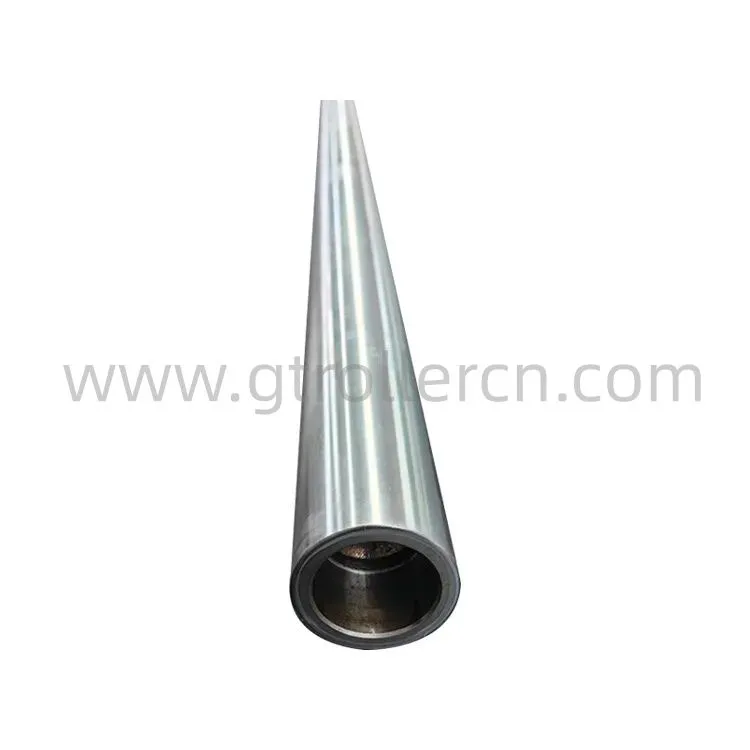
Shape first. A fresh groove is V-shaped, and it should stay that way. The moment the bottom of the V rounds out, or a ledge forms at the groove edge, the roller has lost its straightening function. That's not a judgment call, it's a measurement: run a fingernail across the groove, and if you can feel a ledge, the roller is done.
Size second. The groove has to match the wire diameter. Oversized grooves let the wire wander and straighten poorly. Undersized grooves pinch the wire, score it, and load the roller bearings. When you change wire size, change the rollers. Running an 8 mm wire through a 10 mm groove is how you get both poor straightness and fast, uneven wear.
Regrind or Replace?
A worn roller isn't always scrap. If enough material is left and the groove can be restored to the original profile, regrinding brings it back at a fraction of the cost of a new roller. Carbide rollers need diamond grinding, which is a job for a shop that knows what it's doing, not a bench grinder.
Replace when the groove has deep ledges, the surface is chipped or cracked, or the roller has been reground below the safe profile. The groove is the roller. Once it can't be made right again, no amount of polish brings the function back.
Common Questions
How long does a Pulling straightening roller last?
There's no fixed number, because the material decides. Clean wire on a well-set machine can give months of service. Rusty or scaled material can kill a roller in weeks. The reliable check is the groove: as long as it stays V-shaped and ledge-free, the roller is still working.
Why does my wire keep coming out scratched?
Usually one of three things: a worn groove with a ledge, dirty or scaled material, or a roller that's too hard or too soft for the job. Check the groove first, then the wire condition, then the roller spec. Scratches that follow the wire's path are almost always groove-related.
Can worn rollers be reground and reused?
Yes, if there's enough material left and the groove profile can be restored. This is common for tool steel rollers. Carbide rollers can also be reground, but only with diamond wheels and proper technique. Deep ledges, chips, or cracks mean replacement.
What's the best material for Straightening rollers?
There's no universal answer. Hardened tool steel in the 58 to 62 HRC range is the standard all-rounder. Tungsten carbide wins on abrasive or high-volume work but costs more and chips under shock. Coated rollers suit soft or corrosion-sensitive materials. Match the material to what you feed the machine.
How do I know when a roller needs replacing?
Three checks: the groove shape, the spin, and the product. If the groove has a ledge you can feel, the roller spins gritty or frozen, or the wire shows surface marks that weren't there before, it's time. Replacing on schedule is cheaper than replacing on product failure.
Recently Posted
-
How to Adjust Pressure Settings on a Working Straightening Roller?
September 18, 2026Material straightening is a core process in sheet metal manufacturing, strip processing and precision finishing industries. The ov Read More
 -
How to Reduce Vibration When Installing a New Roller Box?
September 18, 2026Conveyor systems rely heavily on stable rotating parts to maintain consistent material transportation. A Roller box serves as a co Read More
 -
What Are the Effects of Overheated Work Rolls for Wet Scale Breaking?
September 11, 2026There's a roll in a hot strip mill that does its job in total darkness. The scale breaker stand sits right after the roughing Read More