 Business License

What Are the Effects of Overheated Work Rolls for Wet Scale Breaking?
There's a roll in a hot strip mill that does its job in total darkness. The scale breaker stand sits right after the roughing mill, water spraying everywhere, strip moving at speed, and nobody can see the roll surface while it works. The only way you find out it's been overheating is later: strip quality drops, marks show up on the surface, or the roll comes out of the stand with a piece of its face missing.
I've talked to more than one roll shop that opened a freshly changed scale breaker roll and found a shell of surface material sitting loose on the barrel. The roll hadn't been abused in any dramatic way. It had just been running hot for longer than anyone knew.
The uncomfortable part: overheating is invisible while it happens, and it's completely preventable once you understand what it does. So let's walk through it, step by step.
Why These Rolls Get Hot in the First Place
A wet scale breaking work roll does two things: it breaks the brittle oxide scale off the strip with mechanical bending, and it does this under high-pressure water. The strip is hot, the roll is comparatively cool, and every bite transfers heat into the roll surface.
The danger isn't the average temperature of the roll. It's the transient surface temperature during the bite. The surface heats up in a fraction of a second, then the cooling water pulls it back down. That cycle, repeated thousands of times, is where every thermal problem on these rolls starts.
The 600°C Line
Work on high-speed steel rolls has pinned down a number that matters: when the transient surface temperature during the bite goes above roughly 600°C, the roll's oxide film stops being protective and starts being a problem.
Below that line, the thin oxide layer that forms on the roll surface acts as a mild armor. Above it, the film thickens fast, becomes brittle, and starts shedding. The temperature threshold isn't a theory, it's the dividing line between a roll that wears normally and one that starts eating itself.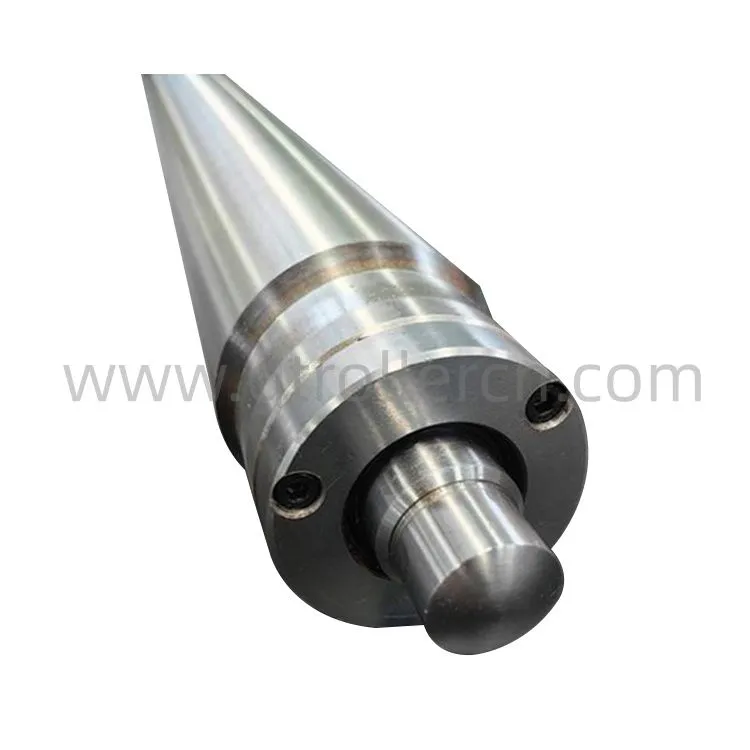
Overheating, Step by Step
Once the surface temperature crosses the line, the damage follows a predictable sequence, and each step makes the next one worse.
Step One: The Oxide Film Thickens
The roll surface oxidizes faster at higher temperature. What was a thin, stable layer becomes a thick, brittle crust. A crust isn't armor, it's a liability. It cracks under the rolling load, and the cracks give water and stress a place to work from.
Step Two: Fire Cracks Open
This is thermal fatigue in its purest form. The surface expands when it heats and contracts when the water hits it, thousands of times per shift. The repeated strain opens a network of fine cracks across the roll face. On their own, fire cracks are manageable. They're the reason rolls get reground on schedule. The problem is when they're left to grow.
Step Three: Spalling
This is the one that ends rolls. A subsurface crack grows until the material above it detaches as a shell, anywhere from a few millimeters to deep enough to ruin the roll. Spalling is driven by the combination of thermal stress from the heat and mechanical stress from the rolling force, and once a shell lets go, the cavity left behind gets worse with every pass.
The Strip Pays the Bill
Here's the part that gets management's attention. An overheated roll doesn't just cost you a roll. It costs you product. Scale and oxide particles pressed into the roll surface get transferred onto the strip as periodic marks. Fire cracks print their pattern onto the strip. A spalled roll can put a visible defect on every meter of strip that passes it.
That means downgrades, rejects, re-grinding downstream, and customer complaints. A roll that overheats quietly can cost more in product quality than the roll itself is worth. This is why the roll shop and the mill floor need to talk, because the roll doesn't announce its temperature, the strip does.
What Drives the Temperature Up
Overheating doesn't happen by accident. It has causes, and they're all findable:
- Blocked or worn cooling water nozzles
- Reduced water flow or pressure at the scale breaker
- Strip running hotter than designed
- Roll bite conditions that concentrate load and heat
- Scale build-up on the roll surface insulating it from the water
The Cooling Water Trap
Blocked nozzles are the most common cause, and the easiest to miss. A spray header that's lost a third of its nozzles still looks like it's working. It isn't. The roll is getting a fraction of the cooling it was designed for, and the surface temperature climbs quietly until something fails.
The water flow check is the cheapest insurance on the mill. It takes an hour, it finds real problems, and it prevents the most expensive failures you'll see this year.
Recently Posted
-
How to Adjust Pressure Settings on a Working Straightening Roller?
September 18, 2026Material straightening is a core process in sheet metal manufacturing, strip processing and precision finishing industries. The ov Read More
 -
How to Reduce Vibration When Installing a New Roller Box?
September 18, 2026Conveyor systems rely heavily on stable rotating parts to maintain consistent material transportation. A Roller box serves as a co Read More
 -
Why Do Pulling Straightening Rollers Wear Out Fast?
September 11, 2026A pulling straightening roller has one job: pull the wire or rod through a set of grooved Rollers while bending it just enough to Read More